

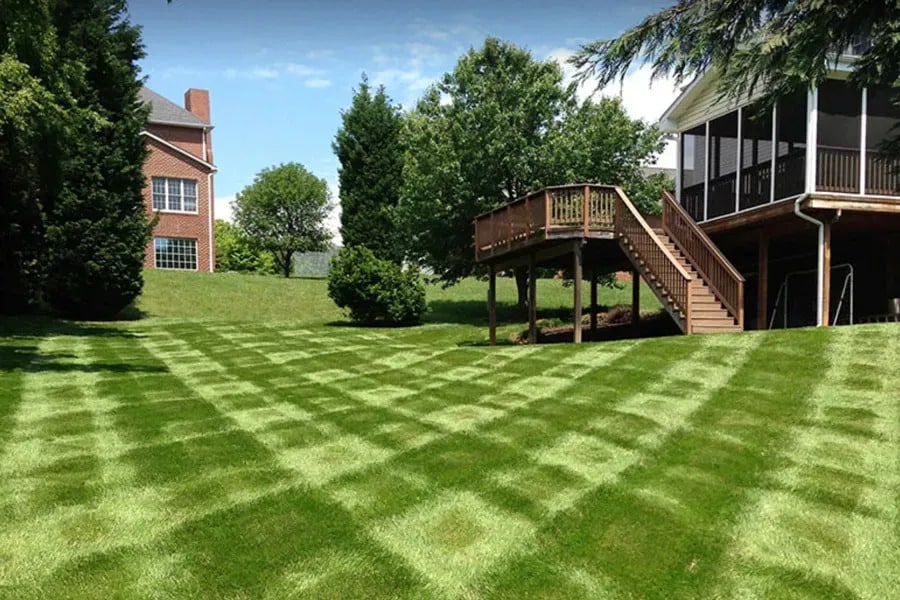
Grass may grow thick in the middle of your yard but thin out beneath a tree or along a fence. If you’ve wondered why grass won’t grow in shade, sunlight is only part of the answer. Tree roots, damp soil, and limited airflow can also make these spots difficult for turf.
A shady lawn may need a different approach from the sunny areas nearby. Before adding more seed or fertilizer, it helps to understand what’s keeping the grass from growing.
Why Does Grass Struggle to Grow in Shade?
Grass needs sunlight to make the energy it uses to grow. With too little light, it grows slowly and may not spread enough to fill bare spots. Foot traffic and everyday wear can then leave the area looking thinner over time.
Trees create another challenge. Their roots draw water and nutrients from the same soil as the grass. Even when the ground looks damp, shallow grass roots may struggle to get what they need. A lawn beneath a tree faces competition above and below the ground.
Fences and buildings can cause similar trouble, although without root competition. A narrow strip beside a house may spend most of the day in shade, while grass just a few feet away gets plenty of sun. Those two areas may need different care and may never look exactly alike.
Why Is Thin Grass Common Under Trees?
Grass under trees deals with shade, tree roots, and fallen leaves. Branches can also block airflow, so the ground may stay wet longer after rain.
But shaded soil isn’t always wet. During dry weather, tree roots may take up much of the water before the grass can use it. A low spot under the same tree might stay wet after a storm.
Moss often grows where grass is already thin. Shade, wet soil, or compacted soil may be why the grass is struggling. Removing the moss won’t fix those conditions.
Tree and shrub care helps keep trees healthy. A lawn professional can also check the area beneath them and provide targeted lawn care solutions for different areas of your lawn.
Can Lawn Care Help Grass in Shady Areas?
Whether grass can grow in shady areas depends on how much direct or filtered sunlight reaches the ground. Grass in partial shade may respond well to the right grass type and a care plan suited to its growing conditions. A spot that gets almost no sunlight is much less likely to support dense turf.
If you mow your own lawn, avoid cutting the shaded grass too short. Keeping it at the recommended height for its grass type leaves more leaf surface to capture the available light.
Proper fertilization can help grass get the nutrients it needs, but fertilizer can’t replace sunlight. Applying more won’t make a deeply shaded strip grow like the open lawn beside it.
Before recommending treatments, we can assess your lawn’s:
- Sunlight hours
- Grass type
- Soil
- Moisture
- Overall turf condition
Our evaluation may show where a lawn care program could improve the grass and where it makes sense to expect thinner coverage.
Get Recommendations for Your Shady Lawn
No single treatment fits every shady spot. Grass under a tree may compete with roots for water, while a patch beside a building may stay damp after rain. Checking the light, soil, and grass in each area can help determine which lawn services may help and where thicker grass may be difficult to grow.
The Green Team has been locally owned and operated for over 25 years and provides lawn care services in Roanoke, VA, Charlotte, NC, and Greensboro, NC. Our experienced team uses treatment plans tailored to each lawn, and our services come with a 100% satisfaction guarantee.
Request a free quote for professional lawn recommendations based on your yard’s conditions.
Frequently Asked Questions
What Grass Grows Best In Shade In Roanoke, VA?
Fescue handles some shade better than many other grasses, but it still needs sunlight. A Roanoke lawn care professional can check the light and soil before you seed a bare spot.
Can You Fix A Lawn That Gets Too Much Shade In Charlotte, NC?
If the area gets some sunlight, fertilization, lawn treatments, and proper mowing may help. For shady lawn care in Charlotte, NC, a professional can tell you whether the spot gets enough light to support thicker grass.
Why Is Moss Growing Instead Of Grass In My Greensboro, NC, Lawn?
Moss often grows where shade and damp soil make it hard for grass to thrive. A lawn care evaluation in Greensboro, NC, can help find the cause, since removing moss alone may not help the grass grow.